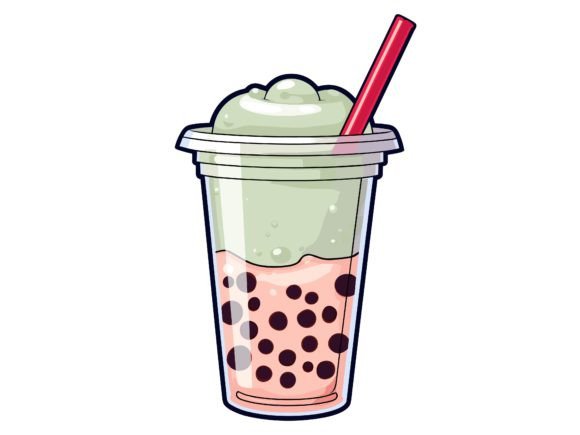
Cute Boba Tea Vector Illustration Guide
Bubble tea culture has exploded globally, transforming from a niche Taiwanese beverage into a massive lifestyle aesthetic. For designers, marketers, and content creators, capturing this trend visually often comes down to one specific asset: the cute boba tea vector illustration. Unlike raster images that lose quality when resized, vector graphics are built on mathematical paths, making them infinitely scalable without pixelation. This technical advantage is crucial when you need the same adorable milk tea graphic to look crisp on a tiny mobile app icon and a massive storefront banner.
Beyond the technical definition, these illustrations serve as a visual shorthand for comfort, youthfulness, and modern social culture. They typically feature soft color palettes, rounded shapes, and expressive characters—often anthropomorphic cups with faces or accompanying mascots. The appeal lies in their ability to soften brand messaging and create an immediate emotional connection with audiences who associate bubble tea with relaxation and treat culture.
Why Vectors Matter for Beverage Branding
Choosing a vector format over standard photography or PNG files solves several practical problems for creative professionals. When working with cute boba tea vector illustrations, you gain complete editorial control. Because every element exists on a separate layer, you can easily swap out the liquid color to match a new strawberry matcha flavor or adjust the cup size to fit a specific layout margin. This flexibility saves hours of redesign time compared to editing flattened raster images.
Scalability is another primary driver for choosing vectors. A small business owner might need a logo for Instagram today but require high-resolution artwork for vehicle wraps or merchandise printing next month. Vector files maintain perfect edges at any dimension. Additionally, file sizes for complex vector illustrations are often significantly smaller than high-resolution photos, which helps maintain fast loading speeds on websites and smoother performance in mobile applications.
Core Characteristics of Appealing Boba Art
Not all beverage illustrations resonate equally. Successful cute boba tea vector art usually shares specific design traits that trigger positive psychological responses:
- Rounded Geometry: Sharp angles suggest danger or seriousness, while circles and soft curves imply safety and friendliness. Most popular boba vectors use exaggerated roundness for both the cup and the tapioca pearls.
- Pastel and Vibrant Palettes: Colors often mimic real ingredients like taro purple, matcha green, and brown sugar amber, but saturated or softened to enhance the "cute" factor rather than strict realism.
- Expressive Simplicity: Facial features on cups are usually minimal—simple dots for eyes and small curves for mouths. This allows viewers to project their own emotions onto the character.
- Texture Suggestion: Even in flat design, skilled illustrators suggest the texture of condensation, foam, or chewy pearls through subtle highlights and shading layers.
Practical Applications Across Industries
The versatility of cute boba tea vector illustrations extends far beyond actual tea shops. Understanding where these assets perform best helps creators maximize their investment.
Hospitality and Food Service
For cafes and restaurants, these vectors function as menu icons, window decals, and loyalty card designs. They help categorize drinks quickly for customers scanning a menu board. A cohesive set of vector illustrations can unify a brand’s visual identity across physical signage and digital ordering platforms, creating a seamless customer experience.
Digital Content and Social Media
Bloggers, influencers, and social media managers frequently use boba vectors as decorative elements in thumbnails, story templates, and post overlays. Because vectors have transparent backgrounds by nature, they integrate effortlessly over photos or colored blocks. They add personality to text-heavy posts and increase engagement rates by breaking up visual monotony.
Merchandise and Print-on-Demand
Entrepreneurs selling stickers, phone cases, tote bags, or apparel rely heavily on vector art. The clean lines and solid colors of cute boba illustrations translate exceptionally well to screen printing, vinyl cutting, and embroidery. Unlike detailed photographs, vector art remains legible and attractive even when printed at very small sizes on product tags or labels.
Educational and Lifestyle Content
Educators creating presentations about Asian culture, culinary arts, or global trends use these illustrations to make slides more engaging. Similarly, lifestyle brands targeting Gen Z and Millennials incorporate boba motifs to signal cultural relevance and align with current aesthetic trends without appearing forced.
Selecting the Right Style for Your Audience
Before downloading or commissioning artwork, consider your specific demographic. "Cute" is subjective, and different styles appeal to different age groups within the 20–50 range.
- Kawaii Style: Characterized by oversized heads, tiny bodies, and sparkles. Best for younger audiences, gaming communities, and playful consumer brands.
- Flat Minimalist: Clean lines, limited color palette, no faces. Ideal for tech companies, modern cafes, and professional blogs seeking a trendy but mature aesthetic.
- Hand-Drawn/Doodle: Imperfect lines and organic textures. Perfect for artisanal brands, personal journals, and creators wanting an authentic, human touch.
- Retro/Vaporwave: Neon colors and nostalgic typography. Appeals to millennials and niche fashion markets referencing 90s/2000s aesthetics.
Important Considerations Before Use
While cute boba tea vector illustrations are powerful tools, using them effectively requires attention to legal and practical details. Licensing is the most critical factor. Always verify whether an asset is for personal use only, requires attribution, or includes commercial rights. Many free resources restrict usage to non-commercial projects, which could expose businesses to legal risk if used in advertising or products.
Technical compatibility also matters. Ensure you have software capable of editing vector formats like .AI, .EPS, or .SVG. While some online tools offer basic editing, professional modifications often require Adobe Illustrator, Affinity Designer, or Inkscape. If you lack vector editing skills, look for pre-packaged sets that include multiple variations so you don’t need to modify the source files extensively.
Cultural sensitivity should guide your selection process. Bubble tea carries cultural significance as a Taiwanese invention that has spread throughout Asia and the diaspora. Avoid illustrations that rely on stereotypes or inappropriate caricatures. Authentic representation respects the drink’s origins while celebrating its global evolution. Researching current trends in Taipei, Tokyo, or Seoul can provide inspiration that feels fresh and respectful rather than generic.
Finally, consider customization potential. Generic vectors are useful starting points, but adding unique elements—your brand colors, specific topping combinations, or custom typography—transforms stock art into proprietary branding. The goal is to leverage the universal appeal of boba aesthetics while maintaining distinctiveness in a crowded market.
Maximizing Value Through Strategic Integration
The true value of cute boba tea vector illustrations emerges when they’re integrated thoughtfully rather than used as mere decoration. Think about consistency across touchpoints. Using the same illustration family on your website, packaging, and social media builds recognition faster than mixing disparate visual styles.
Consider seasonal adaptations as well. Vector files make it simple to add holiday elements—snowflakes for winter, cherry blossoms for spring, or pumpkins for autumn—without redrawing the base cup. This keeps your visual content fresh year-round with minimal effort. Seasonal updates signal to customers that your brand is active and engaged with current moments.
Test different placements and sizes before finalizing designs. What looks adorable at 500 pixels wide might become cluttered at 100 pixels. Preview illustrations in actual context—mockup menus, social media frames, or product prototypes—to ensure readability and visual balance. User feedback during testing phases can reveal whether the chosen style resonates with your intended audience or needs adjustment.
Ultimately, cute boba tea vector illustrations succeed because they combine technical utility with emotional resonance. They solve practical design challenges while tapping into widespread affection for bubble tea culture. Whether you’re launching a new cafe, designing educational materials, or creating personal art, understanding both the functional and cultural dimensions of these assets ensures your work connects authentically with viewers.